
Being told that a skin lesion needs further investigation can understandably raise questions.
What happens next?
Does the lesion need to be removed?
Will I need surgery?
Can skin cancer be treated without surgery?
What is a biopsy?
Will I need further treatment after the lesion is removed?
The answer depends on the type of lesion, whether it is cancerous or precancerous, its size and location, and other individual clinical factors.
At AuzSkin, skin cancer services include assessment, monitoring, biopsy, non-surgical management and surgical excision where clinically appropriate.Skin Cancer Services
What Happens If a Skin Check Finds a Suspicious Lesion?
A suspicious lesion does not automatically mean that you have skin cancer.
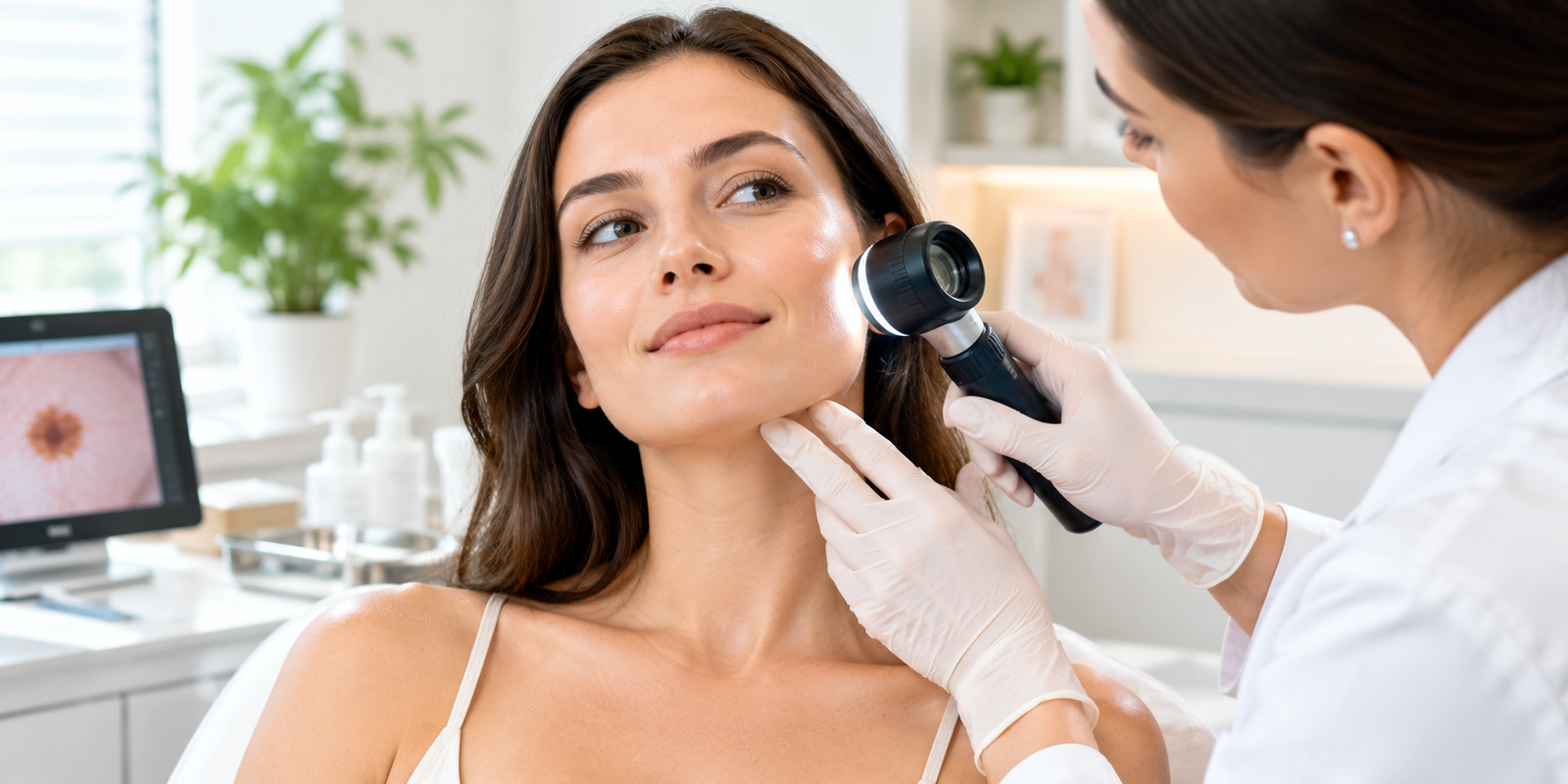
Your doctor may recommend different approaches depending on what they see during the examination.
These may include:
- Monitoring the lesion
- Dermoscopic assessment
- Digital imaging
- Biopsy
- Non-surgical treatment
- Surgical excision
The appropriate next step depends on the individual lesion and your clinical circumstances.
What Is a Skin Cancer Biopsy?
A biopsy involves taking a sample of tissue from a lesion so it can be examined by a pathology laboratory.
A biopsy may be recommended when your doctor needs more information about a lesion before determining the appropriate management.
There are different types of biopsy, and the method selected depends on factors such as the lesion’s appearance, size and location.
A biopsy can help determine whether the lesion is:
- Benign
- Precancerous
- Basal cell carcinoma
- Squamous cell carcinoma
- Melanoma
- Another type of skin lesion
Cancer Council Australia explains that examination and, where appropriate, biopsy can form part of the process of diagnosing skin cancer.
Does Every Skin Cancer Need Surgery?
Treatment depends on the type of skin cancer and its individual characteristics.
Some superficial skin cancers or precancerous lesions may be suitable for non-surgical treatment.
Other lesions may require surgical removal.
Your doctor will assess the lesion and discuss the available options with you.
Non-Surgical Skin Cancer Treatment
AuzSkin offers several non-surgical options for selected superficial skin cancers and precancerous lesions.
These include:
- Cryotherapy
- Topical prescription treatments
- Photodynamic therapy
These treatments are not suitable for every type of skin cancer or every patient.
Your doctor will determine whether a non-surgical approach is appropriate based on the lesion and your individual circumstances.
What Is Cryotherapy?
Cryotherapy uses controlled freezing to treat selected skin lesions.
At AuzSkin, cryotherapy may be used for solar keratoses where clinically appropriate.
Solar keratoses, also called actinic keratoses, are areas of sun-damaged skin that can appear rough, scaly or crusted.
Treatment suitability depends on the lesion and clinical assessment.
After treatment, the area may develop temporary redness, swelling, blistering or crusting as the skin heals.
Your practitioner will provide aftercare instructions based on the area treated and the treatment performed.
What Are Solar Keratoses?
Solar keratoses are areas of skin that have developed changes associated with cumulative sun exposure.
They commonly appear as rough or scaly patches and may occur on areas frequently exposed to the sun.
Some solar keratoses can progress to squamous cell carcinoma, so appropriate medical assessment and management are important.
If you notice a persistent rough or scaly area, particularly on sun-exposed skin, speak with your doctor rather than assuming it is simply dry skin.
What Is Photodynamic Therapy?
Photodynamic therapy, or PDT, is a treatment option that may be used for selected superficial skin lesions and precancerous conditions.
The treatment involves applying a photosensitising substance to the area being treated and then activating it using an appropriate light source.
The exact treatment process depends on the condition being treated and the clinical protocol used.
PDT is not appropriate for every skin lesion, so your doctor will assess whether it is suitable.
What Are Topical Treatments for Skin Cancer?
Certain topical prescription treatments can be used for selected superficial skin lesions and precancerous conditions.
They work differently from surgical excision and are generally applied to the affected area according to a prescribed treatment plan.
Your doctor will explain:
- Which area needs to be treated
- How the treatment should be applied
- How long treatment may be required
- What skin reactions may occur
- What follow-up is required
Because topical treatments are prescription therapies, they should only be used according to the instructions provided by your medical practitioner.
When Is Skin Cancer Surgery Needed?
Some skin cancers require surgical removal.
Surgery may be recommended when a lesion needs to be completely removed or when another treatment approach is not considered appropriate.
AuzSkin provides surgical excision for skin cancers requiring removal.
Most procedures are performed in the clinic under local anaesthetic, depending on the procedure and individual circumstances.
What Is a Skin Cancer Excision?
An excision involves surgically removing a lesion along with an appropriate margin of surrounding tissue.
The removed tissue is generally sent to pathology for examination.
The pathology report can help determine whether the lesion has been completely removed and whether any further management is required.
The size and location of the lesion can influence the surgical approach and wound closure.
What Happens During Skin Cancer Surgery?
Before the procedure, your doctor will explain the planned treatment and discuss relevant risks and aftercare.
The treatment area is cleaned and local anaesthetic is administered to numb the area.
The lesion is then removed according to the planned surgical approach.
The wound may be closed using sutures or another appropriate method.
The removed tissue is sent for pathological assessment where appropriate.
Your doctor will explain wound care and follow-up requirements after the procedure.
Will Skin Cancer Surgery Leave a Scar?
Any procedure that involves cutting the skin can result in a scar.
The final appearance of a scar can depend on factors such as:
- The size and location of the lesion
- The depth of the excision
- The type of closure
- Individual healing
- Skin characteristics
- Aftercare
At AuzSkin, scar management and follow-up care form part of the clinic’s skin cancer service approach.
However, it is important to understand that a scar cannot always be prevented or completely removed.
What Happens After Skin Cancer Removal?
After an excision or other treatment, your doctor may arrange follow-up to:
- Review healing
- Discuss pathology results
- Check the treated area
- Determine whether further treatment is required
- Monitor for new or changing lesions
- Discuss ongoing skin checks
- Provide sun protection advice
Your follow-up schedule depends on your diagnosis, treatment and individual risk.
Who May Be Suitable for MiraDry?
Book a personalised aesthetic consultation at Auzskin and find treatment options tailored to your skin, age and natural features.
What If the Pathology Shows Skin Cancer?
If pathology confirms skin cancer, your doctor will explain the result and discuss the next steps.
Management depends on the type of skin cancer.
Basal Cell Carcinoma
Basal cell carcinoma, or BCC, is the most common type of skin cancer in Australia.
Treatment can include surgical removal and, for selected lesions, non-surgical approaches.
Squamous Cell Carcinoma
Squamous cell carcinoma, or SCC, is another common type of skin cancer.
Treatment depends on the characteristics of the lesion and may include surgical removal or other appropriate management.
Melanoma
Melanoma develops from melanocytes, the pigment-producing cells of the skin.
If melanoma is suspected, further investigation and treatment planning may be required.
Cancer Council Australia notes that early diagnosis is important because melanoma prognosis is strongly associated with the depth of invasion.
If a melanoma is diagnosed, your doctor may recommend further management or referral depending on the pathology and clinical findings.
Why Early Assessment Matters
Not every skin lesion is cancerous, but a new or changing lesion should not simply be ignored.
Cancer Council Australia recommends consulting a doctor if you notice a new lesion or changes in an existing lesion, including changes in shape, colour or size.
Early assessment can help determine what the lesion is and whether monitoring, biopsy or treatment is appropriate.
It is also important to understand that Australia does not have a population-wide skin cancer screening program. Instead, people are encouraged to understand their own skin and seek medical advice when they notice concerning changes or have relevant risk factors.
Skin Cancer Treatment at AuzSkin
AuzSkin provides a range of skin cancer assessment and treatment services.
Skin Checks
A medical assessment of the skin to identify lesions that may require monitoring or further investigation.
Mole Mapping and Monitoring
Digital imaging and dermoscopic assessment can help monitor selected lesions over time.
Biopsies
A sample of tissue can be taken when pathology is required to investigate a lesion.
Non-Surgical Management
AuzSkin offers selected non-surgical options, including cryotherapy for solar keratoses, topical prescription treatments and photodynamic therapy.
Surgical Management
Surgical excisions are available for skin cancers that require removal.
Scar Management and Follow-Up
After treatment, appropriate follow-up and scar management may form part of the ongoing care plan.
How Do Doctors Decide Which Treatment Is Appropriate?
There is no single skin cancer treatment that is suitable for every patient.
Your doctor may consider:
- The type of lesion
- Whether it is benign, precancerous or cancerous
- Size of the lesion
- Location
- Depth
- Clinical appearance
- Dermoscopic findings
- Pathology results
- Previous skin cancer
- Your medical history
- Your individual preferences and circumstances
This is why online information should not be used to select a treatment for a particular lesion.
A clinical assessment is required.
Can You Prevent Skin Cancer After Treatment?
There is no way to completely eliminate your future risk of skin cancer.
However, reducing UV exposure is an important part of protecting your skin.
Cancer Council Australia recommends using sun protection measures when UV levels are 3 or above, including protective clothing, SPF50 or SPF50+ broad-spectrum sunscreen, a hat, shade and sunglasses.
You should also continue to become familiar with your skin and seek medical advice if you notice new or changing lesions.
When Should You See a Skin Cancer Doctor?
Arrange a medical assessment if you notice:
- A new spot
- A changing mole
- A spot that changes colour
- A lesion with an irregular border
- A sore that does not heal
- A lesion that repeatedly bleeds
- A rough or scaly area that persists
- A rapidly growing lump
- A spot that looks different from the others around it
Do not wait for a lesion to become painful before seeking advice.
Some skin cancers may not cause noticeable symptoms.
Skin Cancer Treatment on the Gold Coast and Brisbane
If you are looking for skin cancer treatment on the Gold Coast or Brisbane, AuzSkin provides assessment, monitoring and treatment options for selected skin lesions.
From skin checks and mole mapping through to biopsy, non-surgical treatment and surgical excision, the appropriate approach depends on your individual clinical assessment.
If you have a new or changing skin lesion, arranging a consultation can help determine the appropriate next step.
Frequently Asked Questions
What is the most common treatment for skin cancer?
There is no single treatment that is appropriate for every skin cancer. Treatment depends on the type, size, location and characteristics of the lesion.
Can skin cancer be treated without surgery?
Some superficial skin cancers and precancerous lesions may be suitable for non-surgical treatment. Options can include cryotherapy, topical prescription treatments and photodynamic therapy for selected lesions.
Does every suspicious mole need a biopsy?
Not necessarily. Depending on the clinical assessment, a lesion may be monitored or may require biopsy or removal.
What is the difference between a biopsy and an excision?
A biopsy involves taking tissue to help establish a diagnosis. An excision involves surgically removing a lesion, generally with a margin of surrounding tissue, and the tissue can then be examined by pathology.
Will skin cancer surgery leave a scar?
Surgical procedures can result in scarring. The appearance of a scar depends on several factors, including the location and size of the lesion, the surgical technique and individual healing.
How long does skin cancer treatment take?
Treatment time varies significantly depending on the lesion and treatment selected. Your practitioner can provide more specific information following assessment.
What happens after a skin cancer diagnosis?
Your doctor will discuss the pathology results and recommended management. Depending on the type and characteristics of the skin cancer, this may involve further treatment, follow-up or referral.
Can skin cancer come back after treatment?
A previous skin cancer diagnosis can increase your risk of developing another skin cancer. Your doctor can recommend an appropriate follow-up and skin monitoring plan.
Book a Skin Cancer Consultation at AuzSkin
If you have noticed a new or changing lesion, do not rely on an online image or automated tool to determine what it is.
AuzSkin provides medical skin checks, mole monitoring, biopsies, non-surgical treatment and surgical management for appropriate skin lesions.
Book a consultation to have your concerns assessed and discuss the appropriate next step with a qualified medical practitioner.
Medical Disclaimer
This article provides general information only and does not replace individual medical advice, diagnosis or treatment. Not every treatment is suitable for every lesion or patient. Your practitioner will assess your individual circumstances and discuss appropriate treatment options, potential benefits, risks, limitations and alternatives.