Australia has one of the highest rates of skin cancer in the world, making awareness, skin monitoring and appropriate medical assessment an important part of looking after your skin.
Skin cancer can develop in different forms and may appear as a new spot, a changing mole, a persistent sore or an area of skin that looks different from the surrounding skin. Some skin cancers may have few noticeable symptoms, which is why knowing your skin and discussing any concerning changes with a medical practitioner is important.
At AuzSkin, our skin cancer services provide assessment, monitoring and treatment options for a range of skin concerns, from suspicious lesions requiring further investigation to diagnosed skin cancers requiring non-surgical or surgical management.
What Is Skin Cancer?
Skin cancer occurs when abnormal skin cells grow in an uncontrolled way.
The three main types of skin cancer are:
- Basal cell carcinoma (BCC)
- Squamous cell carcinoma (SCC)
- Melanoma
Basal cell carcinoma and squamous cell carcinoma are commonly grouped as non-melanoma or keratinocyte skin cancers. Melanoma is a different type of skin cancer that develops from pigment-producing cells called melanocytes.
According to Cancer Council Australia, BCC and SCC account for the vast majority of skin cancers in Australia.
What Causes Skin Cancer?
Exposure to ultraviolet (UV) radiation is a major risk factor for skin cancer.
Australia experiences high levels of UV radiation, and cumulative exposure over time can contribute to damage to skin cells. UV radiation can also cause sunburn, premature skin ageing and other forms of skin damage.
Your individual risk can depend on several factors, including:
- Previous sun exposure
- History of sunburn
- Skin type
- Family history
- Personal history of skin cancer
- Number and type of moles
- Outdoor work or activities
- Certain medical or genetic factors
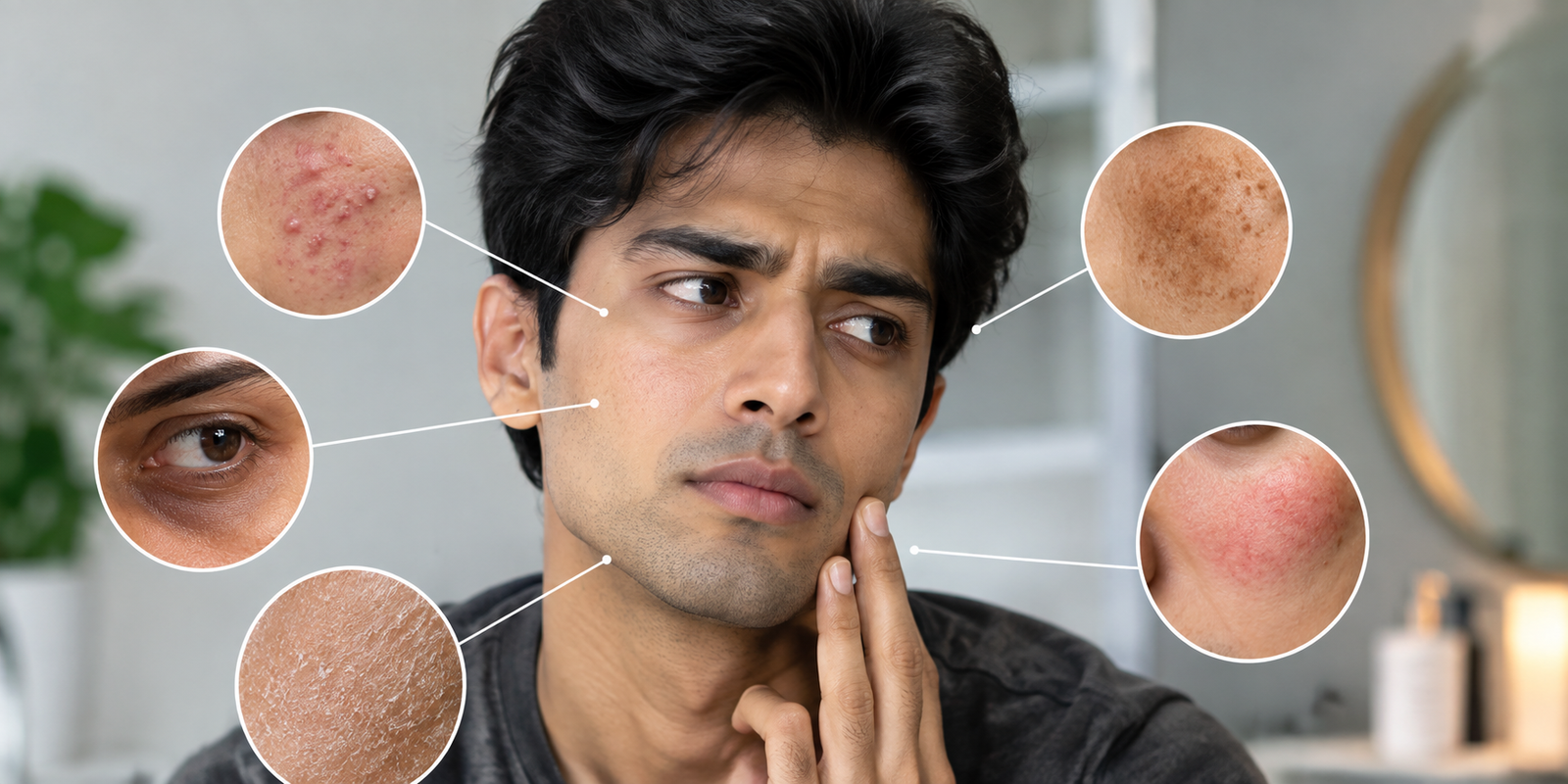
Having darker skin does not eliminate the possibility of developing skin cancer. Skin cancers can occur in people of all skin types and may also develop in areas that are not routinely exposed to the sun.
What Should You Look For When Checking Your Skin?
Getting to know your own skin can help you recognise changes that may need medical assessment.
Look for:
- A new spot or mole
- A spot that is changing in size, shape or colour
- A lesion that looks different from other spots on your skin
- A sore that does not heal
- A spot that bleeds or crusts
- A persistent scaly or rough area
- A lump or growth that changes over time
- A mole with an irregular or changing appearance
For melanoma, the ABCDE approach can be a useful guide:
A: Asymmetry
One half of the spot does not look like the other.
B: Border
The edges may appear irregular, uneven or notched.
C: Colour
The spot may contain multiple or uneven colours.
D: Diameter
A spot may become larger over time.
E: Evolving
The spot changes in appearance, size, shape or colour.
These signs do not establish a diagnosis. If you notice a new or changing lesion, speak with your doctor for appropriate assessment.
Why Have a Skin Cancer Check?
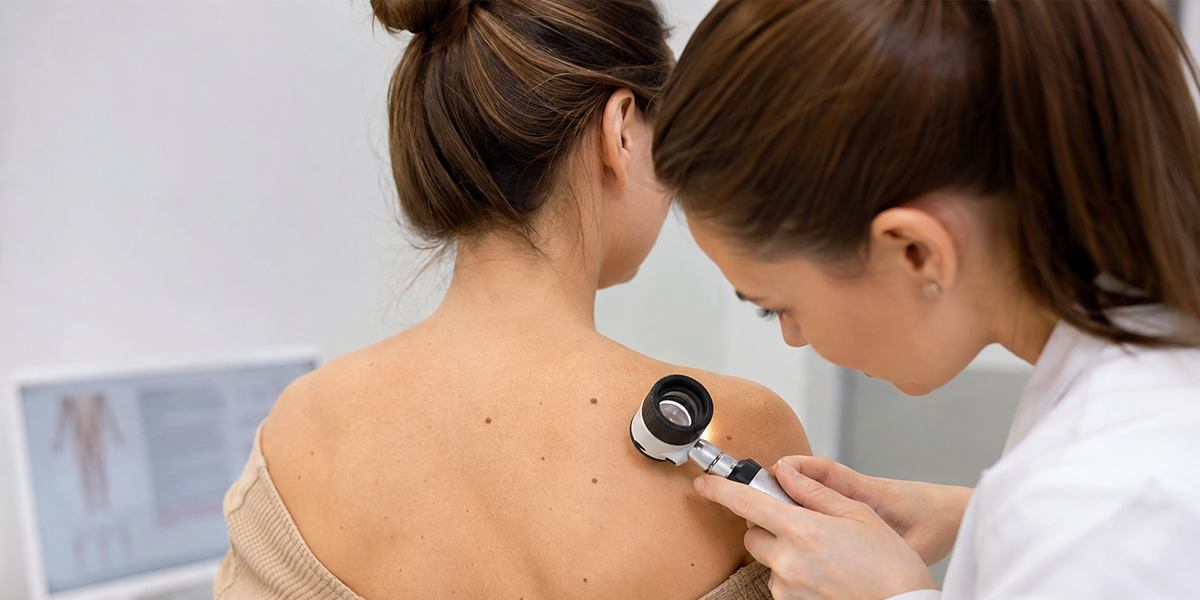
A skin cancer check involves a medical practitioner assessing your skin for lesions or changes that may require further investigation.
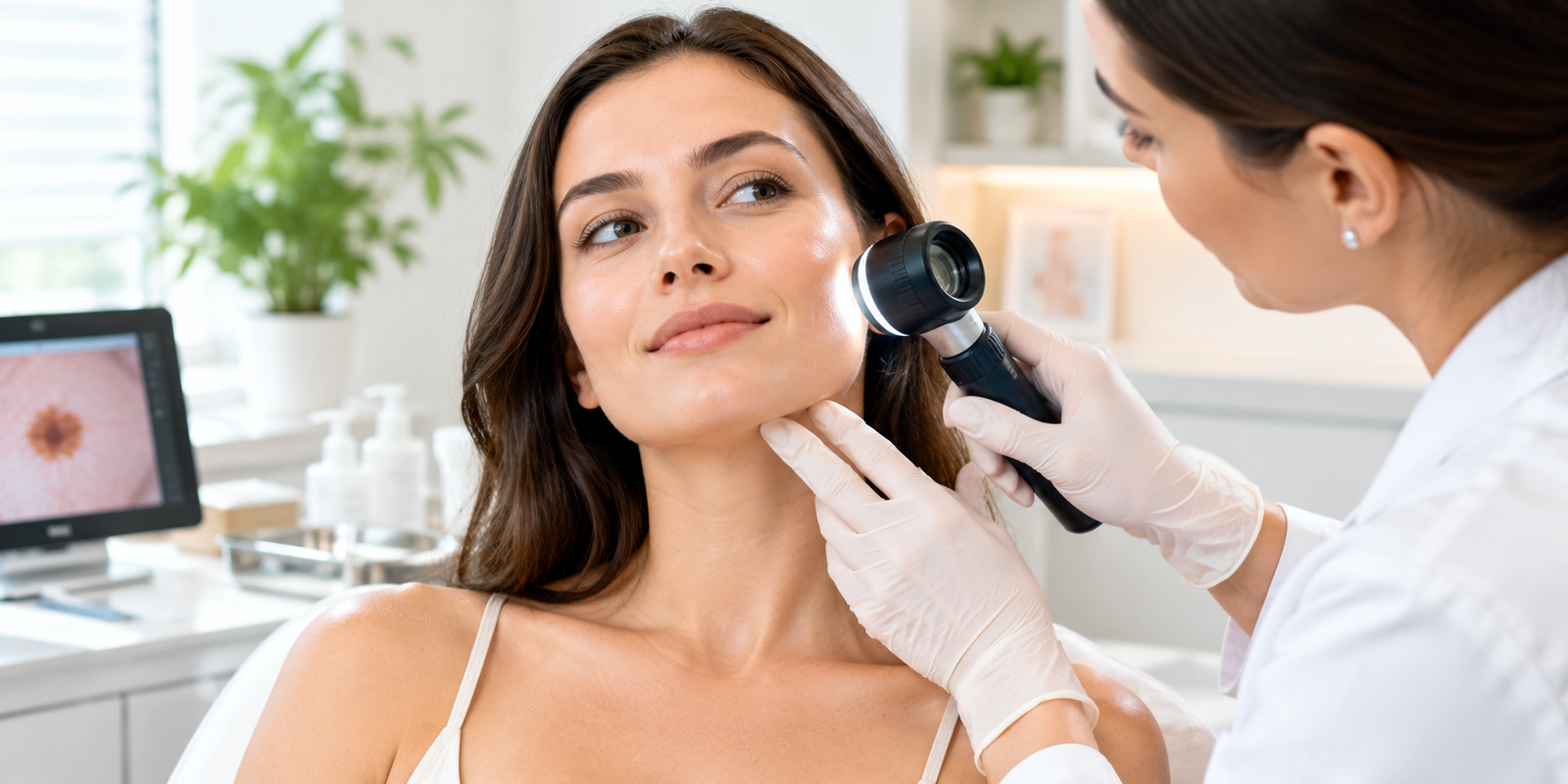
At AuzSkin, skin checks include a thorough examination using dermatoscopes and, where appropriate, digital or AI-assisted imaging to support clinical assessment.
AuzSkin’s skin check consultations are designed to assess overall skin health and may include:
- Full-body skin examination
- Dermoscopic assessment
- Total-body photography for baseline tracking
- Assessment of individual risk factors
- Review of sun exposure history
- Personalised skin cancer prevention advice
The appropriate examination and monitoring approach depends on your individual risk factors and clinical assessment.
What Is Mole Mapping?
Sweating is a normal physiological process.
It helps regulate body temperature and is influenced by factors such as heat, exercise, emotions and hormones.
However, excessive sweating can sometimes occur beyond what would normally be expected for the circumstances.
When excessive sweating is persistent and affects daily life, it may be associated with a condition known as hyperhidrosis.
Underarm hyperhidrosis is known as axillary hyperhidrosis.
If you believe you may have hyperhidrosis, a medical assessment is important. Excessive sweating can have different causes, and treatment should be based on an individual’s circumstances rather than simply the presence of sweating.
What Happens If a Skin Lesion Looks Concerning?
If a doctor identifies a lesion that requires further assessment, they may recommend additional investigation.
Depending on the lesion and clinical circumstances, this may include a biopsy.
What Is a Skin Biopsy?
A biopsy involves taking a sample of tissue from a lesion so it can be examined by a pathology laboratory.
The type of biopsy recommended depends on factors such as the location, size and appearance of the lesion.
A biopsy can help determine whether a lesion is benign, precancerous or cancerous and can assist your doctor in planning appropriate management.
Cancer Council Australia notes that doctors may use a dermatoscope during examination and may perform a biopsy when further investigation is required.
Skin Cancer Treatment at AuzSkin
Treatment depends on the type of lesion, its characteristics, location and other clinical considerations.
AuzSkin provides both non-surgical and surgical management options where clinically appropriate.
Non-Surgical Skin Cancer Management
For selected superficial skin cancers and precancerous lesions, non-surgical treatment options may be considered.
AuzSkin’s current skin cancer services include:
- Cryotherapy for solar keratoses
- Topical prescription treatments
- Photodynamic therapy (PDT)
Not every treatment is appropriate for every lesion. Your doctor will assess the lesion and discuss suitable management options with you.
Surgical Skin Cancer Treatment
Some skin cancers require surgical removal.
AuzSkin’s surgical skin cancer services include:
- Biopsies
- Surgical excisions
- Appropriate wound closure techniques
- Scar management and follow-up care
Most procedures listed by AuzSkin are performed in the clinic under local anaesthetic, depending on the procedure and individual circumstances.
The objective of surgical management is to appropriately remove the lesion while considering factors such as its location, size and surrounding tissue.
Who May Be Suitable for MiraDry?
Book a personalised aesthetic consultation at Auzskin and find treatment options tailored to your skin, age and natural features.
What Is Cryotherapy for Skin Cancer?
Cryotherapy uses controlled freezing to treat selected skin lesions.
At AuzSkin, cryotherapy may be used for solar keratoses where clinically appropriate.
Solar keratoses, also known as actinic keratoses, are areas of sun-damaged skin that can appear rough, scaly or crusted.
Your doctor will assess the lesion before recommending treatment.
What Is Photodynamic Therapy?
Photodynamic therapy, commonly referred to as PDT, is a treatment option that may be used for selected superficial skin lesions and precancerous conditions.
The suitability of PDT depends on the specific lesion and individual clinical circumstances.
Your doctor can explain whether PDT is an appropriate treatment option following assessment.
What Happens After Skin Cancer Treatment?
Follow-up care can be an important part of managing skin health after treatment.
Depending on your diagnosis and treatment, your care plan may include:
- Follow-up skin examinations
- Monitoring of previously treated areas
- Monitoring for new lesions
- Wound care
- Scar management
- Sun protection advice
- Ongoing skin checks based on your individual risk
AuzSkin provides follow-up monitoring and scar management guidance as part of its skin cancer care approach.
If you have previously had skin cancer, your doctor can advise you on an appropriate surveillance plan. Cancer Council Australia also recommends ongoing monitoring and sun protection following skin cancer treatment.
How Can You Reduce Your Skin Cancer Risk?
No approach can eliminate the risk of skin cancer, but protecting your skin from excessive UV exposure is an important part of prevention.
Cancer Council Australia recommends using multiple forms of sun protection when UV levels are 3 or above, including:
- Slip on protective clothing
- Slop on SPF 50 or SPF 50+ broad-spectrum, water-resistant sunscreen
- Slap on a hat
- Seek shade
- Slide on sunglasses
It is also important to continue checking your skin for new or changing spots.
When Should You See a Doctor About a Skin Spot?
Consider arranging a medical assessment if you notice:
- A new or unusual spot
- A mole that is changing
- A sore that does not heal
- A lesion that bleeds or crusts
- A spot that changes in colour or shape
- A rapidly growing lesion
- A spot that looks different from the others on your skin
You do not need to wait for a spot to become painful before seeking medical advice. Some skin cancers may not cause noticeable symptoms.
If you are concerned about a skin lesion, speak with your GP or another qualified medical practitioner.
Why Choose AuzSkin for Skin Cancer Care?
AuzSkin provides skin cancer assessment and management alongside its broader skin health services.
Our current skin cancer services include:
Skin Checks
Thorough skin examinations supported by dermoscopy and, where appropriate, digital and AI-assisted imaging.
Mole Mapping and Monitoring
Digital recording and comparison of selected lesions to support ongoing monitoring.
Non-Surgical Management
Treatment options including cryotherapy for solar keratoses, topical prescription treatments and photodynamic therapy where clinically appropriate.
Surgical Management
Biopsies and excisions for lesions requiring further investigation or removal.
Follow-Up Care
Ongoing monitoring and scar management guidance as part of an individualised care plan.
Our accredited medical practitioners perform skin checks and procedures according to clinical protocols, with treatment options discussed based on individual circumstances.
Skin Cancer Checks and Treatment on the Gold Coast and Brisbane
If you are looking for a skin cancer clinic in Brisbane or the Gold Coast, AuzSkin provides medical skin checks, mole monitoring and skin cancer treatment options.
Whether you have noticed a new or changing spot, have a history of skin cancer, have multiple moles or simply want to discuss your individual skin cancer risk, a consultation can help you understand the appropriate next step.
AuzSkin can assess your skin and discuss whether skin monitoring, further investigation or treatment may be appropriate for you.
Frequently Asked Questions
How often should I have a skin check?
There is no single skin check interval that is appropriate for everyone. Your individual risk factors, previous skin cancer history, number of moles and clinical findings can influence how frequently you may need medical assessment.
Your doctor can recommend an appropriate monitoring plan.
Does a skin check detect every skin cancer?
A skin check is a clinical assessment and cannot guarantee that every skin cancer will be identified. Continue to monitor your own skin and seek medical advice if you notice a new or changing lesion.
What is the difference between a skin check and mole mapping?
A skin check involves examining your skin for suspicious lesions and changes. Mole mapping uses imaging to create a record of selected lesions so that they can be compared over time.
They can be used together depending on your individual circumstances.
Does every suspicious mole need to be removed?
Not necessarily. A suspicious lesion may require monitoring, further assessment or biopsy depending on its clinical characteristics. Your doctor will recommend the most appropriate approach.
Can skin cancer be treated without surgery?
Some superficial skin cancers and precancerous lesions may be suitable for non-surgical management. Treatment depends on the type, size, depth and location of the lesion and other clinical factors.
Does AuzSkin offer skin cancer surgery?
AuzSkin’s current skin cancer services include biopsies and surgical excisions where clinically appropriate. Most procedures are performed in the clinic under local anaesthetic, depending on the procedure and individual circumstances.
Are Medicare rebates available?
AuzSkin states that Medicare rebates may be available for eligible services. Eligibility depends on the service and individual circumstances. Please contact the clinic for current information about fees and Medicare eligibility.
Book a Skin Cancer Consultation at AuzSkin
Your skin can change over time. If you have noticed a new or changing spot or would like to discuss your skin cancer risk, consider arranging a consultation with a qualified medical practitioner.
AuzSkin provides skin checks, mole monitoring, non-surgical management and surgical skin cancer services across its Gold Coast and Brisbane service areas.