
Living in Queensland means enjoying plenty of time outdoors, but regular exposure to ultraviolet (UV) radiation can have a lasting effect on your skin.
A new spot, changing mole, rough patch or unusual mark may simply be related to sun exposure. However, some skin cancers can initially appear as relatively minor changes that may be difficult to identify without a professional assessment.
So, how can you tell when a skin spot needs to be checked?
The safest approach is not to try to diagnose a lesion yourself. If you notice a new, changing or unusual spot, a medical skin assessment can help determine whether it requires monitoring, further investigation or treatment.
AuzSkin provides skin checks, mole monitoring, dermoscopy, digital imaging and skin cancer management services across Queensland.
What Is Sun Damage?
Sun damage refers to changes in the skin caused by cumulative exposure to ultraviolet radiation.
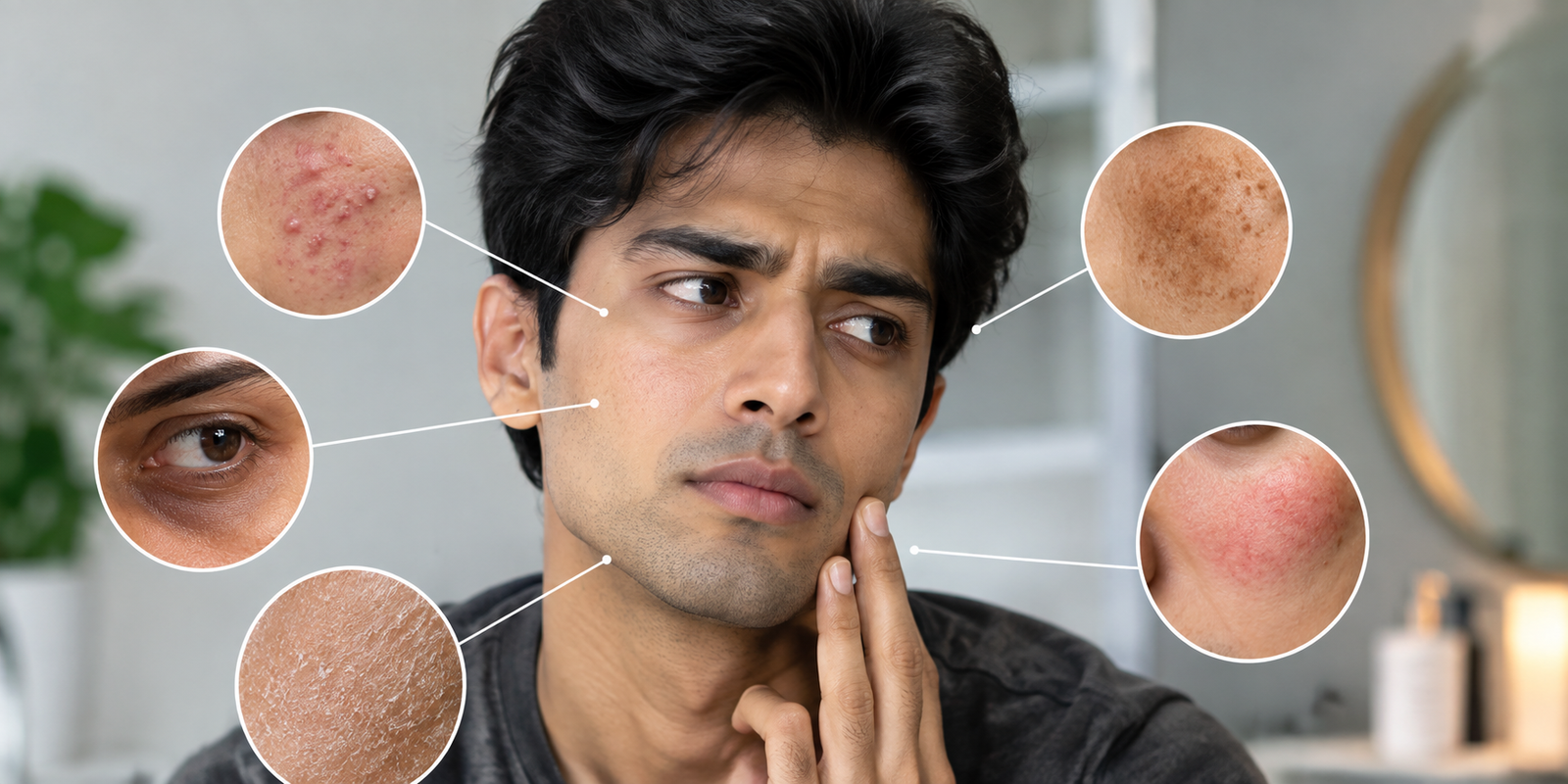
Over time, UV exposure can contribute to:
- Freckles
- Uneven pigmentation
- Sun spots
- Rough or scaly areas
- Changes in skin texture
- Fine lines and wrinkles
- Solar keratoses
- An increased risk of skin cancer
Not every sun-related skin change is cancerous.
However, some precancerous lesions and skin cancers are associated with cumulative UV exposure, which is why persistent or changing skin lesions should be assessed appropriately.
What Is a Solar Keratosis?
A solar keratosis, also known as an actinic keratosis, is a sun-damaged area of skin that can appear rough, dry, scaly or crusted.
Solar keratoses commonly occur on areas that receive regular sun exposure, including:
- Face
- Ears
- Scalp
- Neck
- Forearms
- Hands
A persistent rough patch should not automatically be assumed to be dry skin.
A medical practitioner can assess the area and determine whether further investigation or treatment is appropriate.
AuzSkin provides treatment options for selected solar keratoses, including cryotherapy where clinically appropriate.
What Does a Suspicious Mole Look Like?
There is no single appearance that confirms whether a mole is cancerous.
However, changes to an existing mole or the development of a new and unusual lesion may warrant professional assessment.
Things to look out for include:
- A change in size
- A change in shape
- Changes in colour
- An irregular border
- A lesion that looks different from your other moles
- A spot that continues to change
- A lesion that bleeds or crusts
- A sore that does not heal
These signs do not necessarily mean that a lesion is skin cancer.
They simply indicate that professional assessment may be appropriate.
What Is the ABCDE Method?
The ABCDE method can be used as a general awareness guide when looking at pigmented lesions.
Asymmetry
One half of the lesion may appear different from the other.
Border
The border may appear irregular, uneven or poorly defined.
Colour
There may be variations in colour within the lesion.
Diameter
The lesion may be larger than expected.
Evolving
The lesion changes in appearance over time.
The “E” is particularly important because a changing lesion should not be ignored simply because it previously appeared harmless.
However, the ABCDE method is not a diagnostic tool. If you are concerned about a skin lesion, speak with an appropriately qualified medical practitioner.
Can Skin Cancer Look Like Sun Damage?
Yes.
Some skin cancers can initially resemble common sun-related changes.
This is one reason self-diagnosis can be difficult.
During a professional skin check, your doctor may consider factors such as:
- Your skin type
- Sun exposure history
- Family history
- Previous skin cancer
- Number and type of moles
- Your age
- Individual risk factors
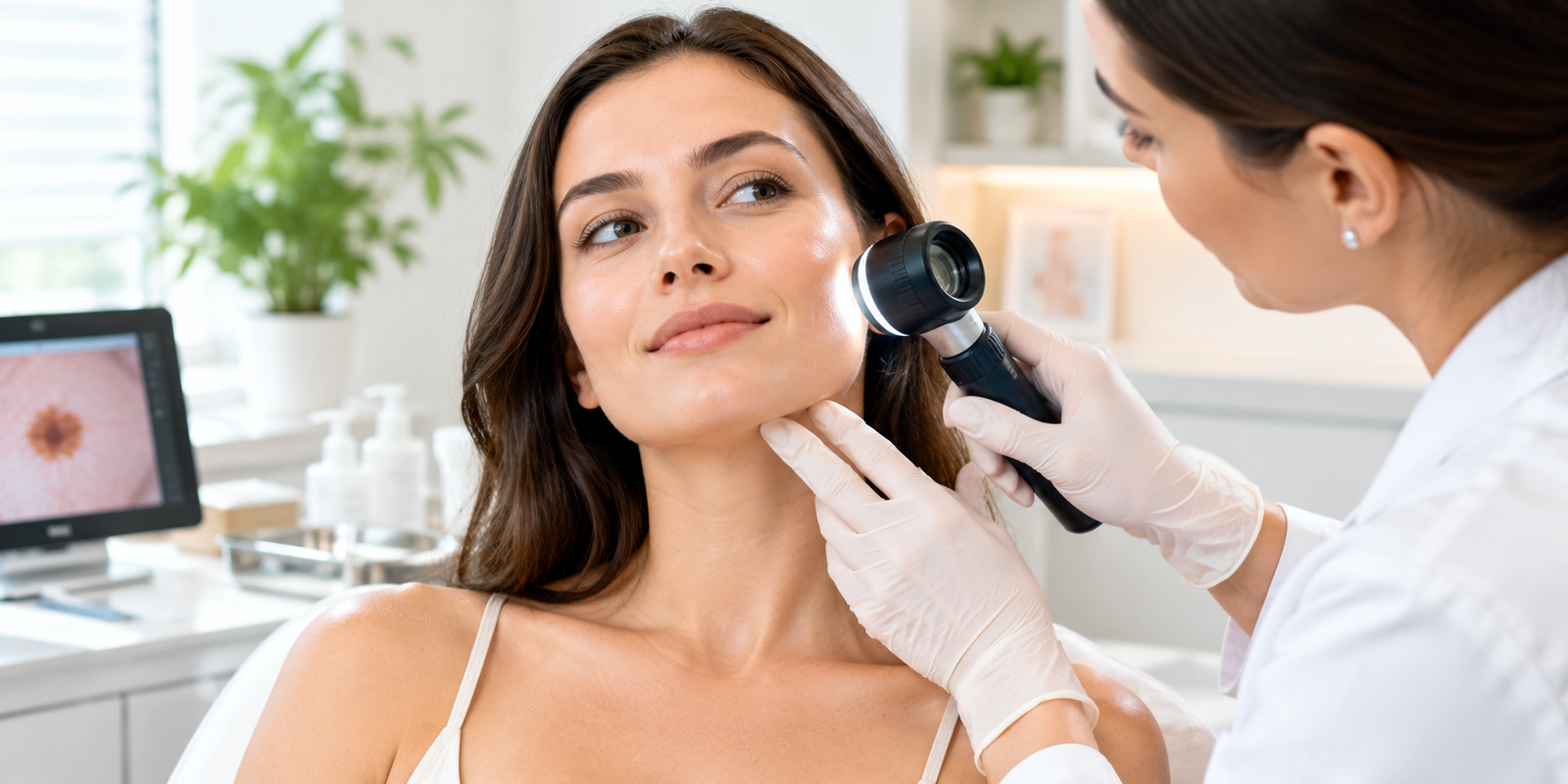
The lesion may also be examined using dermoscopy.
What Is Dermoscopy?
Dermoscopy is a specialised examination technique that allows a trained clinician to examine structures within a skin lesion that may not be visible to the naked eye.
It can provide additional information when assessing moles and other skin lesions.
Dermoscopy may form part of a comprehensive skin check when clinically appropriate.
What Is Digital Mole Mapping?
Digital mole mapping involves taking images of selected areas or lesions of the skin so that they can be compared over time.
This can be useful for people who have numerous moles or lesions that require monitoring.
Depending on the individual’s circumstances, digital monitoring may help a doctor identify changes that require further assessment.
AuzSkin provides mole mapping and monitoring services as part of its skin cancer services.
Can AI Be Used During a Skin Check?
Artificial intelligence is increasingly being explored and incorporated into medical imaging technologies.
AI-assisted imaging can analyse visual patterns and may provide additional information when assessing skin lesions.
AuzSkin offers AI-assisted imaging as part of its skin assessment technology.
However, AI should not be considered a standalone diagnosis.
A qualified medical practitioner still needs to consider the lesion, medical history, risk factors and clinical findings.
If a lesion appears concerning, further investigation may be recommended regardless of an automated imaging result.
When Should You Have a Skin Check?
There is no single skin-check schedule that applies to everyone.
Your individual risk factors can influence how frequently your skin should be assessed.
You may wish to discuss skin checks with a medical practitioner if you have:
- Numerous moles
- A personal history of skin cancer
- A family history of melanoma or other skin cancers
- Significant cumulative sun exposure
- A history of sunburn
- Regular outdoor work or activities
- A changing mole or skin lesion
- A new or unusual skin spot
Your doctor can assess your individual circumstances and discuss an appropriate monitoring plan.
What Happens During a Skin Check?
A professional skin check generally begins with an assessment of your individual risk factors and skin concerns.
Depending on your circumstances, your appointment may involve:
1. Medical History
Your doctor may ask about your sun exposure, skin history, previous skin cancers and family history.
2. Skin Examination
The skin is examined for lesions or changes that may require closer assessment.
3. Dermoscopy
Individual lesions may be examined using a dermatoscope.
4. Digital Imaging
Digital imaging may be used where appropriate to establish a baseline for future comparison.
5. Monitoring or Further Investigation
If a lesion requires further assessment, your doctor may recommend monitoring, a biopsy or another appropriate management option.
What Happens If a Lesion Looks Suspicious?
A suspicious lesion does not automatically mean that it is cancerous.
Depending on the clinical findings, your doctor may recommend:
- Monitoring
- Additional dermoscopic assessment
- Digital comparison
- Biopsy
- Non-surgical treatment
- Surgical excision
- Referral to another specialist where appropriate
A biopsy involves taking a sample of tissue for pathological examination.
Who May Be Suitable for MiraDry?
Book a personalised aesthetic consultation at Auzskin and find treatment options tailored to your skin, age and natural features.
Can Skin Cancer Be Treated Without Surgery?
Some superficial skin cancers and precancerous lesions may be suitable for non-surgical treatment.
Depending on the diagnosis and individual circumstances, treatment options may include:
- Cryotherapy
- Prescription topical treatments
- Photodynamic therapy
- Other clinically appropriate treatments
Not every lesion is suitable for non-surgical management.
Your doctor will determine the most appropriate approach based on the clinical findings and, where required, pathology results.
When Is Surgical Removal Required?
Some skin cancers require surgical excision.
Surgical excision involves removing the lesion and an appropriate margin of surrounding tissue according to the clinical requirements of the lesion.
AuzSkin provides surgical management for skin cancers where removal is clinically indicated.
The specific procedure will depend on factors such as the lesion, its location, size and clinical characteristics.
Why Is Sun Protection Important in Queensland?
Queensland experiences significant UV exposure, and Queensland has a particularly high burden of skin cancer.
UV exposure can occur even when the temperature does not feel particularly hot.
The Queensland Government recommends using five forms of sun protection when the UV Index is 3 or above:
- Slip on protective clothing
- Slop on SPF50+ sunscreen
- Slap on a hat
- Seek shade
- Slide on sunglasses
Sun protection is an important part of reducing UV exposure throughout the year.
Does Sunscreen Prevent All Skin Cancer?
No sunscreen can guarantee that you will not develop skin cancer.
Sunscreen is one component of a broader sun-protection strategy.
Combining sunscreen with protective clothing, shade, hats and sunglasses can help reduce UV exposure.
You should also remain familiar with your skin and seek medical advice if you notice concerning changes.
Skin Cancer Checks at AuzSkin
AuzSkin provides skin cancer detection, monitoring and treatment services across Queensland.
Services include:
- Skin checks
- Mole checks
- Digital mole mapping
- Dermoscopy
- AI-assisted imaging
- Skin biopsies
- Non-surgical skin cancer management
- Surgical excision
- Follow-up care
The appropriate service depends on your individual circumstances and clinical assessment.
When Should You Book a Skin Check?
You do not need to wait until a lesion becomes painful before seeking medical advice.
Consider arranging a skin assessment if you notice:
- A new mole or spot
- A changing lesion
- An unusual pigmented area
- A persistent rough or scaly patch
- A sore that does not heal
- A lesion that repeatedly bleeds or crusts
- A spot that looks different from your other lesions
If you are unsure whether a lesion is significant, a professional assessment can help determine the appropriate next step.
Book a Skin Check With AuzSkin
Your skin can change gradually, and some concerning lesions may not cause noticeable symptoms.
If you have noticed a new or changing skin spot, or would like to discuss your individual skin cancer risk, AuzSkin provides medical skin checks, mole monitoring and skin cancer management services across Queensland.